The Itch
I moved to Spain and it was hard at first. Growing pains & adjustment pains

It’s the end of October and the end of the weekend and the bottom of my scalp is itching so insistently, so undeterred by my scratching, I worry it’s alive.
I am concerned because I am not an itchy person. I fidget, I forget, I move restlessly, but I do not itch. I’ve always been too brash, too honest, and too clueless about social cues, saying hello to everyone and participating in class quite a bit, not even noticing or caring about intellect or aptitude so much as, why isn’t everyone else doing exactly what the teacher asks of them? I am not accustomed to being uncomfortable with myself, inside myself. Yet I can’t stop itching the top of my spine where my thick hair, all sweat and hair gel and late summer curls, meets the part of my neck you’d call a scruff if I were a kitten.
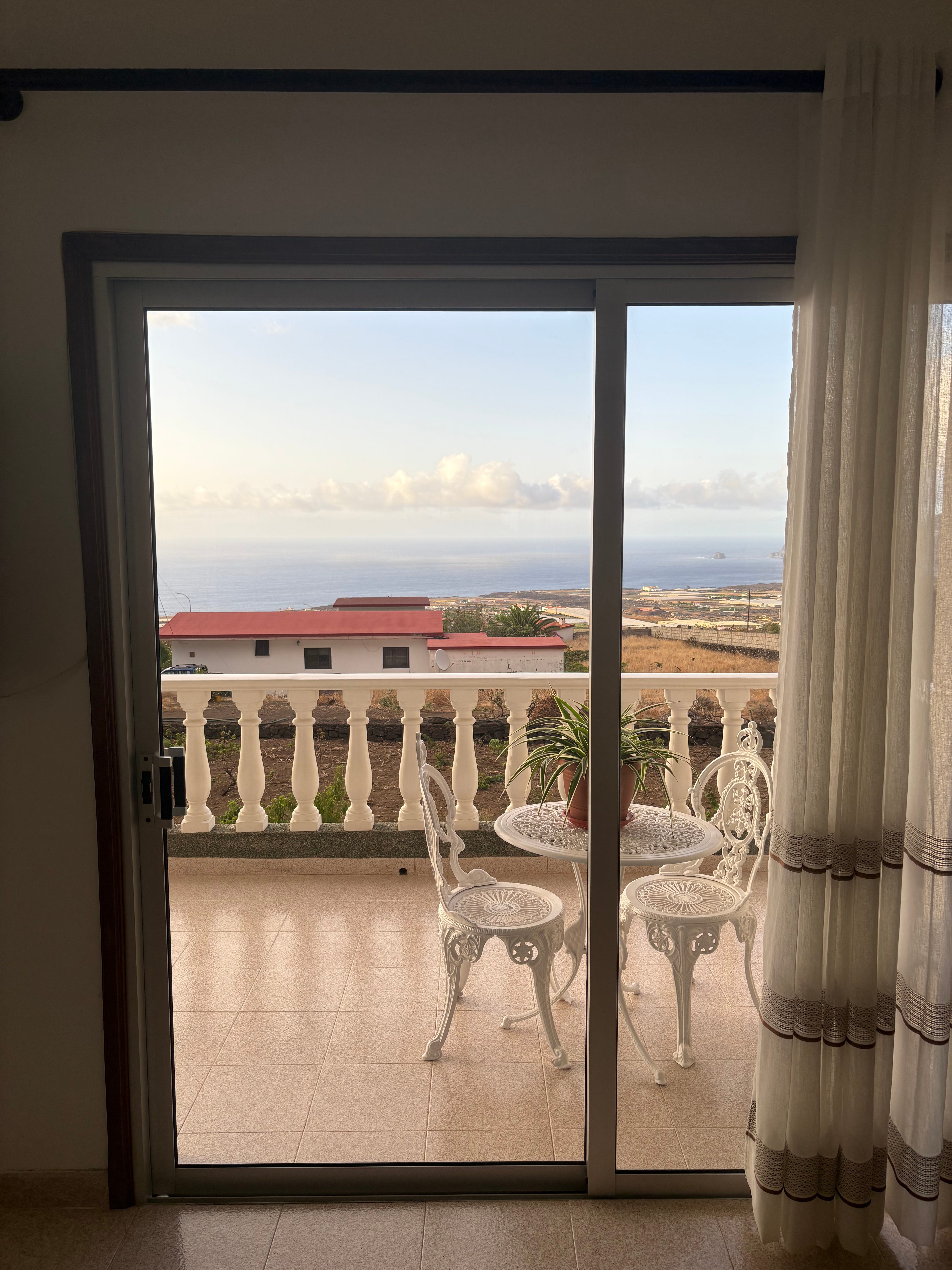
I live alone. In a beautiful apartment I wrecked into my savings account for, but alone. I can see the ocean from my bedroom window, where it stretches white-capped texture into azure blur, milking the line between sky and sea, on hazy days; and where on clear days you can see the sleeping dragon body of La Palma, another island, in the distance, shrouded by low clouds like dream thought bubbles you half-expect to animate into warped vignettes. On weekend mornings, I wake to find my window dappled in condensation, the only evidence the damp cold of night has given into the first morning warm. I can see the ocean from my window, but that’s to be expected. On El Hierro, the ocean is everywhere. It is as much a part of our cartography as the land, which is in the shape of a heart. I stare at my small infinity of space through long windows when I have breaks at work. I peek at the golden blue between half-hearted reps lifting weights at the municipal gym. Some afternoons, I venture down to the natural pools, where crashing waves bring the ocean’s fish swimming around my soft, uncalloused feet. On the phone once, missing me and making sense of our distance, my mother imaged me into my childhood heroine, Laura Ingalls.
“Except instead of prairie,” she said, “it’s miles of sea.

”
In a different, east-facing window in my apartment adjacent to the kitchen, I witness skittish kittens play fight while their mother keeps watch nearby over them, and for food. I am no kitten. I have no scruff, no mother here to shepherd me out of the way. I itch. I itch and it’s probably just because I didn’t wash my hair after I went to the gym this afternoon. All this to have been the least athletic person there. I wonder if the people in the gym today are itchy, dried sweat making them feel like they’re doing everything wrong. Maybe, however, the six-foot-five man using the ropes can flex so hard the itch-inspiring secretion would just burst out of his very skin. Anyway, I have no such muscles, no such self-assuredness, right now.
Despite my logical gym-sweat explanation, I tend toward the hypochondriac: was it cancer? Or worse—lice? I do mean that “or worse” part.
I started Breaking Bad a few weeks ago. In the moments before my battery-powered alarm clock tolls, I am a horse-riding outlaw, unsure of my own inner sinner and samaritan. In my waking life, I think about cancer, family, and how a ticking clock can drive a person one way or another. In Breaking Bad, cancer is a death sentence a long ways down the road. You can live with it for quite a while, and maybe even lie to your family for a month about your diagnosis; you can maybe build your own empire of methamphetamine and lie about that, too. Lice is something that requires immediate attention and the most brutal of intimacies.
Lice ransacked my house twice. My hair didn’t turn curly till puberty so for the majority of my childhood, my three sisters and I shared brushes, hats, hair ties, hair pins, pillowcases, and everything in between. It’s true that young kids are bad at sharing permissibly, but who wouldn’t reach for the closest brush on the rush out the door in the morning? We were two or three years apart in age, standardly distributed across the K-8. Better yet, Marin and I did dance as well as sports. It was more likely than not that if even one lice case hit Manasquan Elementary School, it would hop on a McCarthy head of hair.
The first time it happened, Molly was the first to be discovered. According to her, we acted as if she was diseased for a few days until Ella’s and Marin’s hands began unconsciously finding their way to their crowns, small nails making skin raw. I remember my mother with a preoccupied face, calling my name from my youngest sister Ella’s room, with which I shared a wall. Darting in, I was spun around so my back was turned to her and my mother. She put her hands in my hair, then sighed.
“That makes none of you going to school today,” she probably said.
When Molly was first discovered, Mom dashed out, evidently making a plan of attack and gathering necessary supplies. Upon her return, a have-a-lice-day plastic bag on her forearm from the pharmacy held special shampoo and conditioner and a necessarily exacting comb for the job. She took out a tub of coconut oil from the corner of the lazy susan in the pantry, a quantity I can only imagine coming from the Costco in Eatontown, and worked through Molly’s hair with patience.
Now that I am thinking of it, did we always have that coconut oil? Or did she run to Costco that day, as Molly sat around waiting for her to fix the bugs breeding in her mousy brown hair, as the bugs surreptitiously made the jump from her head to ours? I can’t remember. I do remember, however, taking turns showering and sitting in her lap as she glooped globs of coconut into all of our hair. The bristles of the comb were nearly inseparable, meant to ease out, little by little, the lice’s sticky eggs at the base of our cuticles. I remember crying, and my mom getting upset, too. She didn’t want to do this either.
“I finally understand what ‘nitpicking’ really is,” she said.
Shaving our heads would have made it easier, and I’m sure she considered it. Oh, but my mother. She hunched over each of us, one at a time, for hours on end. At the end, we had four plates to show for it, each one chock-full of creepy-crawlies. All the while, the laundry was somehow going, washing all our sheets on heavy-duty and drying them on anti-bacterial high. Our fluffy comfort objects were put out to pasture, quarantined to a heavy duty garbage bag on the back porch, where the bugs could bake in the weak winter sun. Our hair had never been so greasy, and the elementary school so depleted of McCarthy’s. Well, the latter until my youngest sister graduated from MES a year and a half ago.
El Hierro is the second-smallest of the Spanish Canary Islands. It was the smallest until 2018 when the now-smallest, La Graciosa, was reclassed from islet to island in what I can only call a reverse-Pluto maneuver. The Canarian archipelago is south of Spain, off the west coast of Africa, and El Hierro is the westernmost. West of it? Ocean, and more ocean. If you take a sailboat and go west from Faro de Orchilla, moving in a perfectly straight line like a finger on a spinning globe, the first land you’ll hit is Florida. Specifically, just north of Miami, where my best friend lives. It’s a strange comfort to have a latitude in common.

I live in the low part of the Meridian Island, the valley, where the mountains rise up around us like a crater’s edge. I spent my whole life dreaming of being a fluent Spanish speaker and teaching English in Spain after college, and now I have arrived plainly into that idealized future. I wonder often at how I got to be so big with such contented self-possession of my life. I am organized, a little more clued-in, with dear friendships, accomplishments, storied anecdotes about my travels and college classes that I could hypothetically bring up at dinner parties. Dinner parties aren’t really a thing here, though. And I don’t have any best friends yet. I stumble through conversations in my second-language, sounding boring at best and like a child at worst. I don’t know how to make jokes and I’m a beat behind everyone else’s, laughing when others do too to be included.
My itch is itching. Who on this island do I trust to look at my scalp and give me their opinion? No one, not really, not unless I had cracked my head open and it was an emergency. No, worse—who would, if I had lice, comb through my hair, hunchbacked and careful and indifferent to my cries of pain, to make sure there were no more nits? Who would take their hands to my hair, and help me as I am helpless? Not my mother, and not the Orthodox Jews of Lakewood.
The second time we got lice, we knew when two of my sisters were promptly escorted out of the hair salon. To save herself another round of sweat and tears, my mother outsourced. A few towns over, an Orthodox Jewish family ran a business getting lice out of hair. Fish bumped the glass in an aquarium in the lobby. The TV, meant to occupy us, played Curious George. The Jewish mother and father pumped and pumped from a large jug of conditioner and worked through our hair with trained speed and accuracy. Their children wandered silent underfoot.
As the woman plunged her knuckles into our thick Irish locks, I gazed at her own mane. There was a slight height to her hair, an immediacy of growth where her forehead ended and hairline began. In my hometown, people are mostly Irish and Italian. I didn’t realize right away she was wearing a wig, and didn’t immediately comprehend its significance or implicit irony, other than a marker of difference. According to Jewish religious law, a woman’s hair should only be seen by one’s husband. My mother was shocked that the family knew how to do comb lice, made it their business, were particularly deft at the trade, despite their own cultural modesty. I supposed there are adjustments we make, things we grow comfortable with, to make a living. To make a life.
The trip to New Jersey from El Hierro, and vice versa, is about thirty hours, three flights, and just under three thousand dollars. My mom, the other day on the phone, hid her tears when I told her “no” about Christmas. I know I’ll be messed up, too, with no homemade cookies or stockinged fireplace or time to decorate the tree. But beyond these pleasures, I wonder if she worries I don’t need her. I do need her, did need her even in the lobby. I remember thinking the Jewish couple was so serious in disposition. By the time we were leaving, her easy wit had made the dad laugh, full-bellied, even as he remained steadfast at his work.
Hello, March. So it goes: I itched and itched until I woke up one morning and I realized I had no urge to scratch.
That same October, I met Luz through my neighbor Goretti, who also happens to be my coworker at school, the art teacher. Luz works as a journalist and brand ambassador; I tease her and tell her she’s an influencer. She speaks English and Spanish well, and we speak both together. She lives in Tenerife, but visits El Hierro to see her family, and now me. We dress up and go out dancing together. I told her about my collection of scandals; she explained the meaning of her tattoos. I spent Christmas with her family, and it came and went with such velocity I had no time to be heartbroken about the rupture with tradition. I was too busy learning Canary Islands Christmas songs.
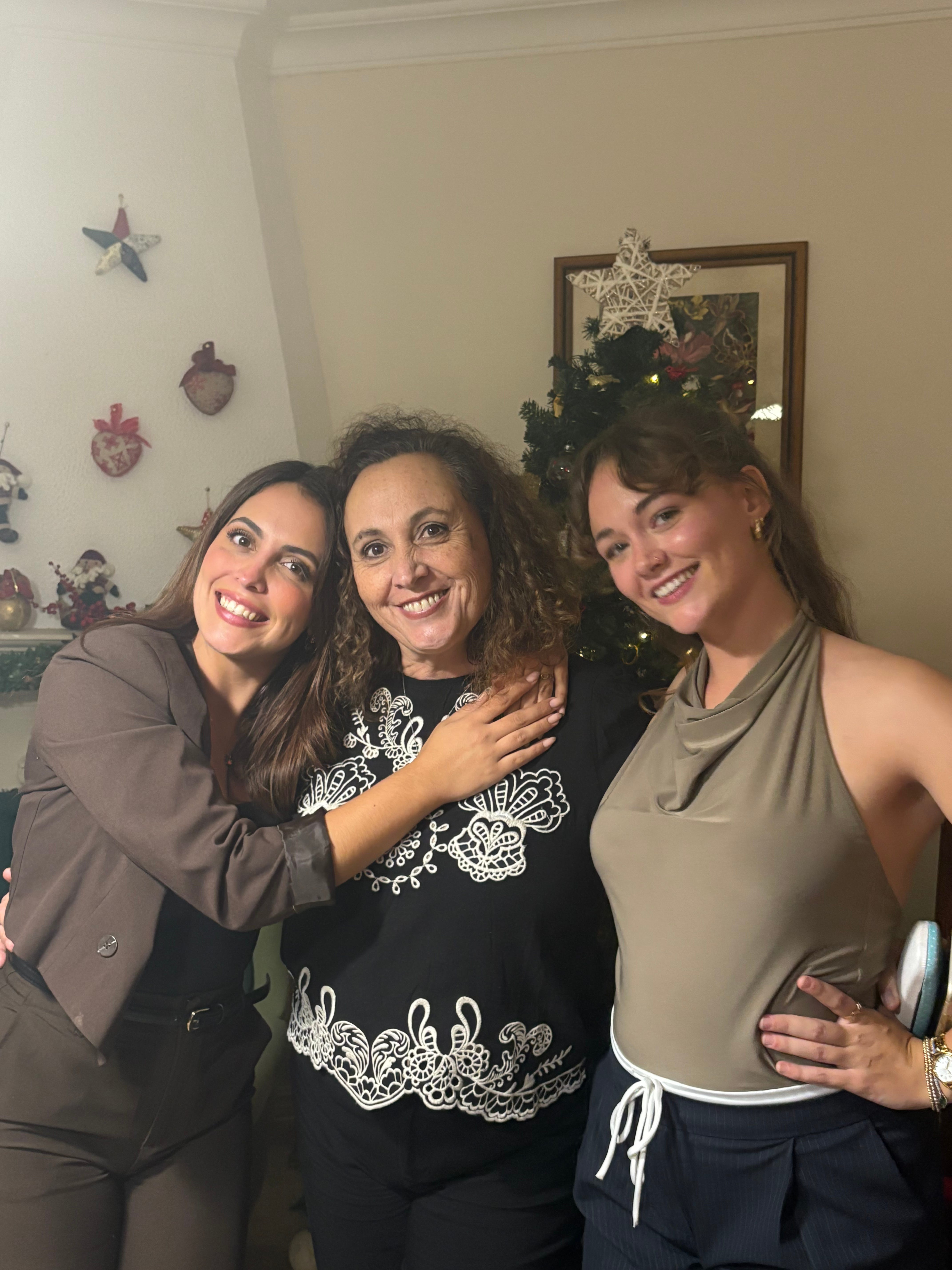
As the months passed, I got closer with my coworkers. We have a restaurant we go to weekly where the waitress knows my name. My students recognize me walking around town in the evenings, and they stop to say hello or introduce me to their families. I spend my work breaks at the bar casino around the corner from the school, where the waitress sets down my usual coffee before I’ve even said a word. Luz and I found other twentysomethings on El Hierro once when she was visiting, and now this group lets me tag along when they go swimming and out for cañas. My Spanish is better, or at least my friends on the island say so. I threw a party for one friend, and had many more I wanted to invite. I make people laugh in two languages now.
Most of all, I have people who I can comfortably ask to drive me to the airport, to the ferry port, who bring me food and teach me their recipes. All of my differences and the things that become lost in translation when two cultures collide set aside: I ask for help. The help puts their hands in my hair.